Research Article | | Peer-Reviewed

Determinants of Children's Preparedness for Primary Education in Djibouti: An Empirical Analysis Using IDELA Assessment

Received: 31 March 2025     Accepted: 9 April 2025     Published: 9 May 2025
Views:       Downloads:
Abstract

School readiness is a foundational predictor of long-term academic success and socio-economic mobility. In Djibouti, disparities in early learning outcomes reflect unequal preschool access, household-level differences, and regional disparities in service provision. This research addresses three questions: (1) What are the levels of school readiness across key developmental domains? (2) Which child-, household-, and region-level factors influence school readiness outcomes? (3) How do these outcomes vary across socio-economic and geographic groups? Drawing on data from 1,155 children aged 5-6 assessed through the International Development and Early Learning Assessment (IDELA), this research employs a multilevel mixed-effects model to estimate the effects of preschool attendance, caregiver engagement, and institutional context across four domains: literacy, numeracy, socio-emotional development, and physical development. The conceptual framework integrates Ecological Systems Theory, Human Capital Theory, and the Cumulative Risk Model to examine the interplay between home, school, and structural environments. Preschool attendance is the strongest predictor of literacy outcomes, associated with a 9.05-point gain (p < 0.001). Father’s participation in home literacy adds 2.64 points (p = 0.015), while the presence of a preschool-enrolled sibling contributes 3.92 points (p = 0.018). No statistically significant gender-based differences were found (p = 0.381). Parental education and behavioral engagement show strong positive associations with literacy and numeracy performance. Public school students score lower in numeracy than peers in private institutions (p < 0.05). Regional disparities are substantial. Preschool attendees in Djibouti-Ville score an average of 99.7, compared to 72.9 in Dikhil and 75.6 in Obock. Children in Tadjourah score 6.90 points lower than those in Ali-Sabieh (p = 0.026). Findings highlight the need for integrated policy reforms that expand equitable access, improve instructional quality, and strengthen parental engagement. Data-driven, multisectoral strategies will enhance school readiness and support Djibouti’s broader development goals.

Published in International Journal of Elementary Education (Volume 14, Issue 2)
DOI 10.11648/j.ijeedu.20251402.11
Page(s) 20-38
Creative Commons

This is an Open Access article, distributed under the terms of the Creative Commons Attribution 4.0 International License (http://creativecommons.org/licenses/by/4.0/), which permits unrestricted use, distribution and reproduction in any medium or format, provided the original work is properly cited.

Copyright

Copyright © The Author(s), 2025. Published by Science Publishing Group

Keywords

Early Childhood Education, Early Childhood Development, Ecological Systems Theory, Human Capital Theory, Cumulative Risk Model

1. Introduction
1.1. Context and Background
Early childhood development (ECD) plays a fundamental role in shaping cognitive, social, and emotional growth. It is closely linked to educational achievement and long-term socio-economic mobility . Children who acquire essential skills—such as literacy, numeracy, and socio-emotional regulation—prior to entering primary school are better positioned to succeed within formal education systems. Conversely, those lacking these foundational competencies face increased risks of grade repetition, disengagement, and early school dropout .
In Djibouti, unequal access to early learning opportunities reinforces educational disparities and exacerbates intergenerational cycles of poverty. Many households, particularly in rural or nomadic settings, lack structured early learning programs, and home-based learning environments are highly heterogeneous in quality and support . The structure and distribution of Early Childhood Education (ECE) services in the country are shaped by regional, economic, and policy-driven constraints that directly impact children’s school readiness outcomes across socio-economic groups .
While preschool enrollment has increased in recent years, significant gaps persist. Participation remains notably low in rural and underserved regions due to infrastructural limitations, financial barriers, and geographic isolation . Children from low-income and nomadic households are especially vulnerable, often entering school with substantially weaker cognitive and language skills . These patterns mirror trends observed in other fragile and low-income contexts, where similar disparities emerge along socio-economic and geographic lines .
Research also highlights the critical role of the home environment. Parental education, socio-economic status, and engagement in learning activities have been shown to significantly influence early cognitive outcomes . Children raised in households where parents read or tell stories regularly exhibit higher levels of literacy and language development. In contrast, many children in low-resource settings depend on unstructured home instruction with limited exposure to books, toys, or educational materials . These disparities hinder school readiness and complicate the transition to structured classroom learning .
To assess school readiness in a standardized and culturally adaptable manner, the International Development and Early Learning Assessment (IDELA) has been developed and applied globally. IDELA evaluates key domains including language and literacy, numeracy, socio-emotional development, and motor skills (Table 1). In Djibouti, the IDELA tool was introduced in 2023 through the USAID/Djibouti Play to Learn initiative, in collaboration with the Ministry of National Education and Vocational Training (MENFOP). This assessment generates critical data to inform national policies on ECE and promote equitable access to quality preschool programs .
Evidence shows that robust early childhood systems are strongly associated with improved learning outcomes, higher primary school retention rates, and reductions in socio-economic disparities . However, when access to these services is unequal, children enter school with different levels of preparedness, which causes gaps in educational achievement to grow over time . To address this challenge, policymakers must implement targeted efforts that identify school readiness gaps, remove structural barriers to learning, and promote equity across regions and social groups .
A rigorous analysis of school readiness determinants in Djibouti is therefore vital. The IDELA framework provides an effective tool for capturing variation in cognitive, social, and physical development across diverse populations. This research aims to produce evidence-based recommendations that support quality improvements, equitable access, and stronger governance in preschool education systems.
Table 1. IDELA dimensions, sub-components, and scores. - The authors.

IDELA Dimensions

Sub-components

Scores

Emergent language and literacy

Expressive vocabulary

20

Letter identification

20

Listening comprehension

5

Emergent writing

4

Print awareness

3

Phonemic awareness

3

Sub-Total

55

Emergent numeracy

Number identification

20

Shape identification

5

Measurement and comparison

4

Simple problem-solving (puzzle)

4

Spatial awareness

4

One-to-one correspondence

3

Simple operations

3

Classification/sorting

2

Sub-Total

45

Social-emotional learning

Peer relationships

10

Self-awareness

6

Emotional awareness and regulation

4

Empathy

3

Conflict resolution

2

S-Total

25

Physical development

Hopping on one foot

10

Drawing a human figure

8

Copying a shape

4

Folding paper

4

Sub-Total

26

Total IDELA Score

151

1.2. Problem Statement and Research Questions
School readiness stands as a critical determinant of long-term academic achievement and socio-emotional development. It includes a spectrum of cognitive, linguistic, and emotional competencies that enable children to transition successfully into formal education. Foundational skills in literacy, numeracy, and self-regulation strengthen classroom engagement and academic performance . Children who begin primary school without these essential skills often fall behind their peers, experience lower achievement, and face an increased risk of dropping out .
Persistent inequities in early learning opportunities reinforce educational disparities and limit socio-economic mobility. Delayed intervention allows learning gaps to widen and reduces children’s potential to reach developmental benchmarks. High-quality ECE programs reduce these disparities, enhance early development, and support inclusive economic advancement . However, access to ECE remains limited for children in low-income and marginalized communities .
In Djibouti, children from affluent households have greater access to structured preschool programs. Children from economically disadvantaged families—especially those in rural and nomadic areas—frequently lack formal early learning opportunities . Inadequate infrastructure, a shortage of trained educators, and weak parental engagement intensify these disparities . Children without preschool experience depend on home learning environments, which vary substantially based on caregiver education, household resources, and cultural practices . These differences result in significant gaps in school readiness, particularly in foundational domains such as literacy and numeracy .
Structural constraints restrict the expansion of early childhood learning across Djibouti. Geographic isolation, insufficient public financing, and educator shortages limit service coverage outside urban centers . National education policies identify early learning as a national priority, but gaps in implementation persist. Preschool enrollment remains particularly low among children from disadvantaged households . The lack of structured learning at the pre-primary level contributes to unequal starting points and undermines children’s ability to succeed in school .
Most available research on ECE in Djibouti focuses on enrollment trends and infrastructure coverage. Few studies assess how child, household, and community-level factors interact to shape school readiness. IDELA offers a standardized and context-sensitive instrument to assess early learning outcomes and inform policy reforms . A comprehensive, data-driven analysis is needed to support national planning and drive inclusive educational change.
This research investigates the determinants of school readiness among children in Djibouti. It uses IDELA data to analyze how child characteristics, household socio-economic status, and early learning environments influence school preparedness. The study identifies key disparities and systemic barriers affecting children’s transition to primary school, with particular attention to differences across socio-economic and regional groups.
The following research questions guide this inquiry:
1. What are the levels of children’s readiness for primary school across core IDELA domains?
2. What factors—including child characteristics, household conditions, and early learning environments—influence school readiness outcomes?
3. How do school readiness outcomes vary across socio-economic and geographic groups?
4. What policy recommendations can enhance ECE and improve school readiness in Djibouti?
This research supports national and regional priorities to strengthen equitable and high-quality early learning systems. It affirms the importance of using standardized tools such as IDELA to generate reliable data for evidence-based education planning and policy reform .
1.3. Significance of the Research
This research addresses critical disparities in ECE in Djibouti. Socio-economic and geographic inequalities continue to constrain school readiness, particularly in rural and nomadic regions. Infrastructure deficits and the scarcity of trained early educators obstruct children’s development and limit their ability to acquire foundational cognitive and social skills . The absence of structured preschool services perpetuates gaps in school preparedness and weakens long-term educational trajectories.
Evidence-informed reforms remain essential to reverse current trends. Without targeted interventions, inequalities in ECE will persist and replicate broader socio-economic divides. Efforts to strengthen school readiness contribute directly to national initiatives aimed at expanding educational access and improving learning outcomes for vulnerable populations .
ECE has been recognized globally as a cornerstone of national development and poverty reduction. Research has confirmed that high-quality preschool programs generate long-term returns through improvements in primary school completion, early brain development, and labor productivity in adulthood . Equitable access to such programs enables disadvantaged children to acquire foundational skills that support academic success .
Djibouti continues to face major obstacles in scaling access to quality early learning. Community-based preschools and accelerated learning models have shown effectiveness in fragile and resource-constrained environments . These models offer practical alternatives where formal infrastructure remains limited or inaccessible.
Any reform will fail without careful attention to the quality of service delivery. Improvements in teacher preparation, curriculum alignment, and parental involvement are necessary to ensure meaningful learning outcomes . Institutional weaknesses, including poor oversight, limited professional development, and inadequate support systems, continue to compromise the effectiveness of early childhood programs .
This research provides the empirical foundation needed to design policies that address both structural and pedagogical challenges. Existing literature affirms the value of localized, evidence-based research in informing strategic responses to educational inequalities . The IDELA tool, already adopted in Djibouti, supports standardized measurement of school readiness and facilitates the identification of systemic gaps .
Preschool education must become a central pillar in Djibouti’s education reform agenda. Fair access to quality early learning services strengthens individual potential and advances national objectives for equity, social inclusion, and sustainable development.
2. Literature Review
2.1. Conceptual Framework
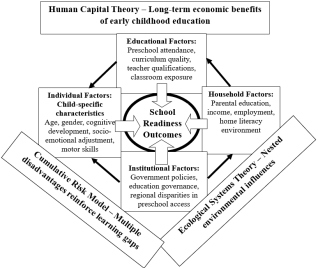
School readiness results from the interplay of individual, household, educational, and institutional factors. This research applies an integrated conceptual framework that draws from ecological systems theory, human capital theory, and the cumulative risk model to examine how these dimensions influence early learning outcomes in Djibouti. Each of these theoretical foundations has been recognized as essential to understanding the dynamics that shape child development in complex environments .
Ecological systems theory offers a structured lens for analyzing how environmental contexts influence early development. Development occurs within multiple, nested systems. The microsystem includes direct relationships with caregivers, teachers, and family members. These relationships influence children’s cognitive and emotional growth . The mesosystem involves the connections between family, school, and community. These interactions can reinforce or undermine learning continuity, particularly in resource-constrained environments . At the exosystem level, access to early childhood programs, the availability of trained teachers, and the presence of supportive policies shape children's learning opportunities . The macrosystem encompasses broader forces, including education policy, socio-economic structures, and prevailing cultural attitudes that define the availability and quality of ECE . An analysis of these layers reveals the systemic constraints that affect school readiness in Djibouti. Recent longitudinal studies confirm the importance of the ecological framework in tracing how shifts in parental employment, community support systems, and institutional resources affect kindergarten readiness and later academic achievement .
Human capital theory emphasizes the long-term economic and social benefits of early investments in learning. Foundational skills acquired during early childhood—such as literacy, numeracy, executive functioning, and socio-emotional regulation—form the basis for future academic success and labor market outcomes . Preschool education, parental involvement, and enriched home environments influence the formation of these competencies . Robust evidence from empirical work shows that early learning shapes educational attainment and income levels. These findings support early investments in fragile economies . Greater access to high-quality ECE strengthens national human capital and promotes equity, especially in fragile and unequal contexts like Djibouti .
The cumulative risk model underscores how multiple disadvantages intersect to produce significant developmental setbacks. These disadvantages often include poverty, low parental education, food insecurity, weak home stimulation, and lack of preschool access. Exposure to two or more of these risk factors often correlates with lower cognitive and behavioral outcomes across all domains of school readiness . Repeated exposure to these risks has been shown to reduce literacy, numeracy, and socio-emotional development, particularly for children in underserved communities . Longitudinal studies describe the compounding effects of sustained risk exposure on academic trajectories, and predictive models enhance intervention design .
This conceptual framework organizes early learning determinants into four analytic dimensions. The first includes child-level factors such as age, gender, developmental status, and socio-emotional adjustment. The second captures household and socio-economic characteristics, including parental education, income, employment, and the quality of home learning environments . The third dimension includes early learning environments, where preschool attendance, teacher training, curriculum quality, and classroom exposure shape cognitive and motor development . The fourth dimension focuses on institutional and policy-level factors, including government resource allocation, education governance, and regional disparities in service availability . This multi-level framework serves as the basis for assessing school readiness outcomes and identifying the root causes of learning inequities in Djibouti.
Figure 1. Framework for school readiness outcomes - The authors.
2.2. Empirical Evidence
ECE plays a critical role in developing cognitive, socio-emotional, and physical skills. Preschool programs of high-quality help prepare children for school by building foundational competencies in literacy, numeracy, and problem-solving. Structured early learning environments improve primary school outcomes and support self-regulation and behavioral development . Persistent learning gaps in low- and middle-income countries often reflect unequal access and inconsistent program quality. Children from disadvantaged households frequently enter primary school with delayed development, which undermines academic progress and reduces long-term attainment .
Empirical research from the Middle East and North Africa (MENA) confirms the advantages of preschool participation. Children who attend formal early education programs consistently outperform peers with no such exposure in language and numeracy assessments . Studies in Tunisia, Morocco, and Jordan link preschool attendance to higher primary school completion rates and lower dropout risks . Despite these gains, access remains limited in rural and underserved areas. Household income, parental literacy, and geographic location continue to shape enrollment patterns and perpetuate structural inequalities in early learning.
Similar trends are documented across East Africa. In Ethiopia, children from urban households outperform rural peers in school readiness scores. Differences in preschool participation and home learning environments explain much of the gap . Community-based preschool programs in Kenya have improved transition outcomes and fostered cognitive development for children in low-income settings . In Uganda, policy-led efforts to strengthen teacher training and standardize early childhood curricula have produced measurable gains in literacy and numeracy .
Djibouti faces significant structural and economic barriers in delivering ECE. Most children do not attend formal preschools and instead rely on informal, home-based settings . Children in rural and nomadic communities face additional challenges caused by poverty, isolation, and limited educational infrastructure . Parents in these regions often lack access to learning materials and are unable to provide structured educational support. The limited funding for preschool expansion continues to constrain the pace and scope of national reform initiatives .
Children’s socio-economic background continues to shape school readiness. Wealthier families typically provide more learning resources, structured activities, and interactive environments, all of which support early skill acquisition . Households with low income offer fewer opportunities for cognitive stimulation. Parental education also influences school readiness outcomes. Parents who engage in storytelling, book reading, and interactive learning activities strengthen children’s pre-academic skills and language development . Longitudinal studies show that early disparities in learning environments and school readiness indicators persist into adolescence and strongly predict educational attainment .
The cumulative risk model presents a comprehensive lens to understand disparities in early learning. Children exposed to overlapping vulnerabilities—such as poverty, low parental education, inadequate preschool access, and unstable home environments—show significantly lower performance in literacy, numeracy, and socio-emotional domains . Fragile education systems, weak teacher training, and inconsistent governance widen these disparities in many low-income contexts . National systems that lack coordination or sustained investment struggle to deliver consistent early learning opportunities across regions. Effective responses must involve coordinated policies that eliminate economic, institutional, and service delivery gaps. Studies confirm that family risk profiles help predict readiness outcomes, and policy tools can target these vulnerabilities .
Examples from other countries point to the success of integrated approaches. In Rwanda and Tanzania, community-based preschool programs have increased school readiness, particularly among disadvantaged children. Countries that prioritize teacher training, parent involvement, and early literacy development report sustained gains in educational outcomes and social mobility . Policies that combine education with health, nutrition, and psychosocial support have shown the greatest potential to close school readiness gaps and improve long-term outcomes . Research on early intervention programs supports these frameworks and demonstrates educational attainment gains .
Djibouti requires a focused policy agenda to ensure the expansion and improvement of ECE. Policymakers must prioritize preschool access, elevate teacher quality, and enhance learning environments in the most underserved areas . Effective reforms must align household conditions, school-level interventions, and national governance. Equitable and well-financed preschool systems will serve as a foundation for improved school readiness and broader national development.
2.3. Gaps in the Literature
Research consistently affirms the importance of ECE in promoting school readiness. Despite this consensus, significant knowledge gaps remain in understanding how multiple influences interact to shape early learning outcomes in Djibouti. School readiness results from the dynamic interplay between child-level characteristics, household conditions, early learning environments, and institutional structures . However, existing studies have not integrated these dimensions into a unified analytical framework. This fragmentation limits the potential for designing targeted and effective interventions. Most research isolates individual factors without examining their cumulative or interrelated effects on school preparedness . A comprehensive approach is necessary to understand how family, community, and policy environments converge to influence ECD.
Evidence from the MENA region highlights the role of preschool attendance in improving school outcomes. Despite this progress, few studies explore the long-term impact of ECE on academic trajectories. While enrollment trends are well documented, limited empirical attention has been given to the quality of early learning experiences or their links to future achievement . Human capital theory emphasizes the economic value of early education investments, yet longitudinal data connecting preschool participation to labor market outcomes or economic mobility remain scarce. Institutional influences, particularly in fragile or low-capacity systems such as Djibouti, have also received minimal empirical scrutiny . There is a lack of rigorous evaluation of government-led ECE programs and their success in addressing equity gaps in access and learning.
The cumulative risk model underscores the compounded effect of overlapping socio-economic disadvantages on school readiness. However, current literature does not quantify how income level, parental literacy, and geographic location interact to intensify these risks in Djibouti . Few studies have examined the intersection between rural-urban divides, home learning environments, and parental education levels . Household-based interventions—such as parenting education, home stimulation support, and early literacy exposure—have yet to be systematically assessed for their effectiveness in reducing developmental disparities .
Ecological systems theory draws attention to classroom quality, teacher preparation, and instructional methods as critical components of school readiness . Despite widespread recognition of these influences, Djibouti lacks empirical assessments of teacher training quality, curriculum relevance, and classroom dynamics . Research has acknowledged the importance of educator qualifications, yet few evaluations have been conducted to determine whether current training programs equip teachers with the skills needed for preschool instruction. Curriculum design, pedagogical strategies, and learning materials have not been analyzed in terms of their impact on early learning outcomes .
Institutional and policy dimensions remain the most underexplored aspect of ECE in Djibouti. National policies, budgetary allocations, and governance arrangements play a decisive role in shaping access to and quality of preschool education. However, little research has evaluated how policy frameworks are implemented or whether they produce measurable gains in school readiness . Longitudinal studies tracking the effectiveness and sustainability of national preschool programs remain absent. Without evidence on institutional performance, it is difficult to determine whether ongoing reforms are generating meaningful improvements .
Despite growing international interest in ECE, major analytical gaps persist in Djibouti’s research landscape. An integrated approach must be adopted to assess how individual, household, educational, and institutional variables interact to influence learning. Longitudinal research should trace the effects of preschool education on later academic outcomes and socio-economic mobility. Comprehensive evaluations of teaching quality, curriculum design, and classroom resources are required to guide effective reform. Policy-oriented research must analyze governance systems, financing mechanisms, and long-term program viability. Filling these gaps is essential to ensure that early learning policies and investments achieve equitable and sustainable outcomes.
3. Materials and Methods
3.1. Research Design
This research applies a quantitative multilevel mixed-effects modeling framework to examine the determinants of school readiness in Djibouti. The conceptual framework incorporates child-level characteristics, household socio-economic factors, early learning environments, and institutional influences to analyze early learning outcomes with statistical rigor. Hierarchical data structures—such as children nested within households and households nested within regions—necessitate the use of multilevel modeling techniques that accommodate nested dependencies .
The limitations of single-level regression models have been widely documented. Analyses that ignore data clustering produce biased standard errors and undermine the validity of statistical inference. Observations from children in the same household or from households in the same region are not independent . Children often share environmental and educational conditions, while households in the same geographic zone may experience similar access to preschool services, socio-economic conditions, and governance structures. A multilevel approach corrects for these dependencies by distinguishing between within-group and between-group variation .
The fixed effects in this model estimate the direct impact of key predictors—including preschool attendance, parental education, household income, and home learning resources—on children’s school readiness scores. These estimations address critical policy questions regarding the contribution of each factor to early learning. For instance, the model quantifies how preschool attendance shapes emergent literacy and whether parental education enhances children's preparedness for structured learning .
The random effects component isolates unmeasured heterogeneity at the household and regional levels. This addition accounts for contextual differences in preschool infrastructure, cultural norms, and sub-national governance structures that influence child development but are not explicitly captured in the dataset . The model improves the precision of fixed effect estimates by adjusting for such latent influences.
This modeling framework offers substantial analytical benefits for complex education data. The multilevel mixed-effects model explicitly accounts for the hierarchical structure of the dataset, where children are embedded in households, and households within regions. Ignoring this nesting inflates type I error rates and underestimates standard errors, thereby biasing inference. Multilevel modeling corrects for these risks by assigning variance components to each level of clustering. This allows the analysis to differentiate context-specific influences on school readiness outcomes. Furthermore, the model mitigates omitted variable bias by capturing unobservable heterogeneity across higher-level units, such as household behaviors and regional disparities. These attributes make multilevel modeling an ideal approach for educational studies in fragile and resource-constrained settings such as Djibouti.
Let Yij represents the IDELA score for children i in household j. The model is structured as follows.
Yij=β0+β1Xij+β2Wj+uj+eij(1)
Where:
Yij = IDELA score for child 𝑖 in household 𝑗
Xij = Individual-level predictors (e.g., age, gender, preschool attendance, home learning activities)
Wj Household/community-level predictors (e.g., parental education, income level, rural/urban status)
uj = Random effect for household/community (captures unobserved heterogeneity)
eij = Individual error term
This model accounts for both child-specific variations (Level 1) and household/community influences (Level 2) to ensure robust estimates of school readiness determinants.
Since IDELA measures multiple dimensions of school readiness, the research estimates separate multilevel models for each competency domain.
1. Language & Literacy IDELA Score (𝑌1). Predictors: Preschool attendance, home literacy environment, parental education, household income
2. Emergent Numeracy IDELA Score (𝑌2). Predictors: Parental numeracy engagement, preschool curriculum quality, region of residence
3. Socio-Emotional Learning IDELA Score (𝑌3). Predictors: Parental involvement, peer interaction at home, gender differences
4. Physical Development IDELA Score (𝑌4). Predictors: Household nutrition, early childhood play activities, preschool exposure
Separate models are estimated for each IDELA domain—literacy, numeracy, socio-emotional development, and motor skills. A disaggregated analysis offers greater clarity on how predictors vary in their influence across competencies. Certain variables may exert stronger effects on cognitive skills than on socio-emotional outcomes. A domain-specific modeling strategy supports the development of targeted interventions that address each dimension of school readiness effectively .
The model further decomposes the variance across levels, which enables policymakers to pinpoint where interventions are likely to be most effective. If the results reveal that preschool attendance significantly improves outcomes across all IDELA domains, policy attention must shift toward expanding preschool access nationally. If parental education shows stronger effects on literacy and numeracy than on socio-emotional development, then complementary interventions such as parental literacy training may be more appropriate . A substantial random effect at the regional level would highlight the need for decentralization of early childhood programming to address localized disparities.
This methodological framework strengthens the analytical precision of the research. Multilevel modeling not only enhances the robustness of statistical inferences but also equips policymakers with a clearer understanding of how individual, household, and contextual factors interact to shape school readiness. The research is expected to generate actionable insights for evidence-based policy development and improved ECE governance in Djibouti.
3.2. Data Collection and Analysis Methods
This research is based on data collected through the USAID Play to Learn project, implemented in partnership with the MENFOP. A structured survey methodology, aligned with the IDELA framework, was used to assess school readiness across four core domains: language and literacy, numeracy, socio-emotional development, and physical development . The IDELA tool was adapted for Djibouti through the USAID Play to Learn Project, in collaboration with the MENFOP and the Ministry for Women and the Family (MFF), to ensure alignment with local language, culture, and early learning practices. A pilot phase informed necessary revisions, and trained enumerators collected data using digital tools. A parental questionnaire captured household characteristics and caregiver engagement. Cross-validation and multivariate analyses confirmed IDELA’s reliability and relevance as a context-appropriate measure of school readiness in Djibouti.
Data collection combined direct child assessments with structured household surveys. MENFOP coordinated the fieldwork, with technical and financial support provided by USAID. The sample included 102 schools across six regions in Djibouti. Initially, the study assessed 1,840 children, comprising 1,316 preschool attendees and 524 children with no formal preschool exposure. Among these, 1,155 children had matched parental survey data and were included in the final analytic sample. This refined sample formed the basis of the quantitative analysis.
Stratified sampling was applied to ensure proportional representation by region, school type, and socio-economic background. Digital data collection tools, including KOBO Toolbox, supported real-time data entry, reduced transcription errors, and improved data accuracy. Gender roles in decision-making were also captured. In Djibouti- Ville, 43.7% of households reported mothers as the primary decision-makers. In other regions, this proportion ranged from 36.2% to 51.4%. Preschool attendance rates varied geographically, with the highest in Djibouti- Ville (81.4%) and the lowest in Ali-Sabieh (65.7%).
The analytical approach combined traditional econometric tools with AI-driven diagnostics to produce comprehensive and policy-relevant insights. SPSS and STATA were used to conduct descriptive statistics, bivariate analyses, and multilevel mixed-effects modeling. The multilevel model estimated the fixed and random effects of child-specific, household, and contextual variables on each IDELA outcome. Variable selection and model structure followed the theoretical foundations of Ecological Systems Theory, Human Capital Theory, and the Cumulative Risk Model.
AI-assisted analysis supported interpretation beyond conventional methods. Pattern recognition, unsupervised clustering, and latent structure detection enriched the understanding of multi-dimensional drivers of school readiness. The integration of AI-generated analytics enhanced both explanatory depth and predictive value .
Refinements in the regression specification addressed key estimation concerns. The sample from Obock, which included only 47 children, led to unstable variance estimates. For this reason, Obock was excluded from the multilevel regression models. The final models included sensitivity analyses and validation checks to confirm robustness and reduce omitted variable bias. Cluster-adjusted standard errors and hierarchical variance decomposition techniques strengthened the reliability of inference.
The methodological rigor applied in data processing, modeling, and validation ensures that empirical results accurately reflect the structural, socio-economic, and educational determinants of school readiness in Djibouti. This approach provides a strong foundation for targeted, evidence-informed policy recommendations.
3.3. Limitations
This research offers critical insights into the determinants of school readiness in Djibouti, yet it operates within specific methodological and data-related constraints. The original IDELA assessment included 1,840 children; however, only 1,155 cases were successfully matched with parent survey data. This reduction in the analytic sample limited the precision of household-level estimates, particularly those concerning socio-economic characteristics. The exclusion of unmatched households may introduce selection bias, potentially affecting the generalizability of household-level findings . While regional coverage remains intact, unobserved household characteristics could still shape school readiness outcomes in ways not captured by the model.
The analysis is based on cross-sectional data, which captures child development outcomes at a single point in time. This design restricts the ability to evaluate long-term effects of ECE. Without longitudinal tracking, it remains difficult to establish how preschool participation influences later academic trajectories or socio-emotional development . Longitudinal data would allow for more rigorous assessment of causality and the durability of early learning gains. Future research should integrate follow-up assessments to enhance understanding of developmental patterns and sustained impacts.
The research also contends with sample size imbalances at the regional level. The exclusion of Obock from the regression analysis was necessary due to its small sample size (n = 47), which distorted variance estimates and reduced model reliability. Although this step improved statistical stability, it limited the model’s ability to capture unobserved heterogeneity at the regional level . A more balanced sample across all regions would strengthen future multilevel models and enable more precise analysis of geographic disparities in school readiness.
Potential response biases may have influenced household-level data. The survey relied on self-reported information from parents regarding education practices, economic conditions, and learning support at home. These responses may reflect social desirability or recall bias, particularly in hierarchical datasets . The use of administrative records, direct home observations, or triangulated data sources would improve data accuracy and mitigate these concerns in future studies.
Reaching remote and underserved communities presented logistical challenges. Although the sampling strategy ensured regional inclusion, lower preschool attendance in rural areas may reflect infrastructure barriers rather than parental decisions. Such constraints complicate the interpretation of regional variation in enrollment patterns . A more in-depth analysis of structural obstacles—including transportation, facility quality, and teacher deployment—would enhance understanding of access limitations in remote areas.
Despite these limitations, this research contributes valuable empirical evidence to support ECE policy in Djibouti. Strengthening future research through expanded regional coverage, longitudinal follow-up, and mixed-methods data collection will enhance analytical depth and policy relevance. The findings underscore the need for more inclusive, data-informed, and context-sensitive strategies to reduce early learning disparities and improve school readiness outcomes.
4. Results
The analysis emphasizes the role of preschool attendance, gender, household characteristics, and regional differences in shaping early learning outcomes. The average child in the sample is 6.2 years old (SD = 0.42). Boys constitute 54.8% of the sample, while girls represent 45.2%. Approximately 72% of the children attended preschool, whereas 28% did not. The attendance gap reflects substantial barriers to early education access.
Baseline data from the IDELA show consistent variation in early childhood development outcomes across regional, institutional, and household-level characteristics. The IDELA tool assesses child development in four domains: emergent language and literacy, emergent numeracy, socio-emotional development, and physical development. The statistics below summarize observed patterns using means and standard deviations (SD) to highlight the range and dispersion of scores.
Children in Djibouti-Ville attained the highest mean scores across all domains. Average scores were 31.79 in literacy (SD = 12.80), 27.20 in numeracy (SD = 11.21), 13.68 in socio-emotional development (SD = 5.12), and 20.91 in physical development (SD = 4.68). In comparison, children in Dikhil reported lower outcomes, especially in literacy (21.96, SD = 13.42) and socio-emotional development (9.40, SD = 5.59). Results from Tadjourah followed a similar pattern, with a literacy mean of 22.46 (SD = 12.23) and a physical development mean of 17.44 (SD = 5.64).
Differences by primary school type were also evident. Children enrolled in private schools scored substantially higher across all domains—36.62 in literacy (SD = 11.29), 31.92 in numeracy (SD = 9.61), 14.62 in socio-emotional development (SD = 4.95), and 21.92 in physical development (SD = 4.02). Their peers in public schools averaged 23.87 in literacy (SD = 12.32), 19.20 in numeracy (SD = 9.93), 10.89 in socio-emotional development (SD = 4.93), and 18.25 in physical development (SD = 5.64).
Children with preschool experience consistently outperformed those without. Preschool attendees achieved mean scores of 29.05 in literacy (SD = 12.55), 23.94 in numeracy (SD = 10.88), 12.30 in socio-emotional development (SD = 5.04), and 19.90 in physical development (SD = 5.08). In contrast, children without preschool exposure averaged 19.02 in literacy (SD = 11.66), 15.46 in numeracy (SD = 8.87), 9.74 in socio-emotional development (SD = 4.93), and 16.45 in physical development (SD = 5.97).
Preschool type also correlated with performance differences. Children from private preschools scored the highest: 35.72 in literacy (SD = 11.41), 31.37 in numeracy (SD = 9.65), 14.42 in socio-emotional development (SD = 4.89), and 21.72 in physical development (SD = 4.07). Children from public preschools scored moderately lower, while those from community preschools reported the lowest mean in literacy (19.75, SD = 14.22) but the highest in physical development (23.50, SD = 1.29), with minimal variability.
Across child gender, scores were largely consistent. Boys averaged 26.10 in literacy (SD = 13.12) and 21.92 in numeracy (SD = 11.21), while girls averaged 26.37 (SD = 13.09) and 21.09 (SD = 10.80), respectively. Socio-emotional and physical development means were also similar, with only marginal differences in averages and standard deviations.
Parental education level aligned with performance differences. Children of parents with no formal education averaged 22.81 in literacy (SD = 12.36), 17.99 in numeracy (SD = 9.35), 10.50 in socio-emotional development (SD = 4.93), and 17.84 in physical development (SD = 5.78). Children whose parents completed higher education recorded the highest averages: 36.07 in literacy (SD = 11.66), 31.76 in numeracy (SD = 10.18), 14.46 in socio-emotional development (SD = 4.88), and 21.65 in physical development (SD = 4.32). The lowest socio-emotional score appeared among children whose parents responded “don’t know” (8.00, SD = 3.90).
Differences in parental employment status further illustrate performance variation. Children of formally employed parents scored 30.88 in literacy (SD = 13.23), 26.65 in numeracy (SD = 11.60), 12.94 in socio-emotional development (SD = 5.05), and 20.35 in physical development (SD = 5.26). Those with informally employed parents scored slightly lower across domains, while children of unemployed parents had the lowest scores, including 23.70 in literacy (SD = 12.35) and 18.93 in numeracy (SD = 9.90).
The total IDELA score also varied across key categories. Children in Djibouti-Ville had the highest average total score of 93.58 (SD = 29.01), while those in Dikhil and Tadjourah scored 66.69 (SD = 32.08) and 68.75 (SD = 26.81), respectively. Children in private schools scored 105.07 (SD = 25.24), substantially higher than their public-school counterparts (72.37, SD = 27.52). Preschool attendance corresponded with a higher total score (85.28, SD = 28.51) than among children who did not attend preschool (60.88, SD = 26.11). Children from private preschools averaged 103.23 (SD = 25.41), while those from public and community preschools scored lower.
Gender-based differences remained small, with boys averaging 78.89 (SD = 30.27) and girls 77.85 (SD = 29.53). Children whose early education decisions were made by male guardians scored 83.14 (SD = 30.65), compared to 76.62 (SD = 29.48) for those whose decisions were led by female guardians. The highest total IDELA score appeared among children of parents with higher education (103.94, SD = 27.38), while children of parents with no formal education scored 69.35 (SD = 26.96). Children from formally employed households had a mean total score of 90.82 (SD = 31.22), compared to 71.86 (SD = 27.30) among children of unemployed parents.
These descriptive statistics provide a foundational overview of early childhood development outcomes at baseline. The results underscore variability in performance by structural and socio-economic dimensions, though no causal inferences should be drawn from these patterns. Further statistical modeling developed below determine the significance and drivers of the observed differences.
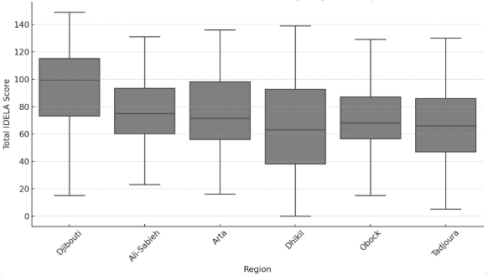
Figure 2. Total IDELA scores distribution by region (Boxplot) - The authors.
Clear regional disparities appear in IDELA scores. Children residing in Djibouti- Ville demonstrate the highest average scores, particularly among preschool attendees, with a mean score of approximately 99.7. In contrast, lower performance is recorded in Dikhil (mean ≈ 72.9) and Obock (mean ≈ 75.6). These differences underscore substantial variation in both the availability and quality of ECE across regions. Across all locations, children who attended preschool scored roughly 20 points higher than those who did not, reaffirming the foundational role of early education in supporting school readiness.
Statistical tests validate the strength of these associations. Preschool attendance significantly predicts IDELA scores (p < 0.001, t = 13.43); children with access to structured early education enter primary school better prepared. Gender differences do not reach statistical significance (p = 0.51, t = 0.65). Boys and girls demonstrate comparable learning outcomes when they experience similar educational opportunities. Parental involvement emerges as a critical factor. Children whose parents engage in reading and home-based learning activities perform significantly better on IDELA assessments (p < 0.001, F = 16.31). These results confirm the importance of early literacy exposure and a cognitively supportive home environment.
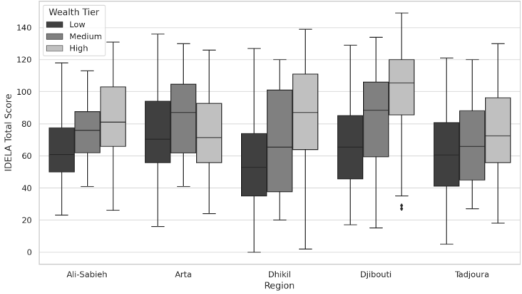
The analysis of socioeconomic gradients in early learning outcomes applied a behaviorally grounded classification of household wealth. The classification drew on five indicators of caregiver engagement in cognitively rich activities, such as reading to the child and teaching letters, numbers, shapes, and new skills. The absence of each activity contributed to a cumulative score, which enabled clear categorization into three wealth tiers: Low (three to five activities absent), Medium (one to two absent), and High (no activities absent). This method avoids reliance on asset ownership and instead captures qualitative differences in home learning environments. It reflects both material capacity and practical involvement of caregivers in early cognitive development. The wealth tier distribution—258 children in the Low tier, 196 in Medium, and 564 in High—shows considerable variation in developmental conditions across households.
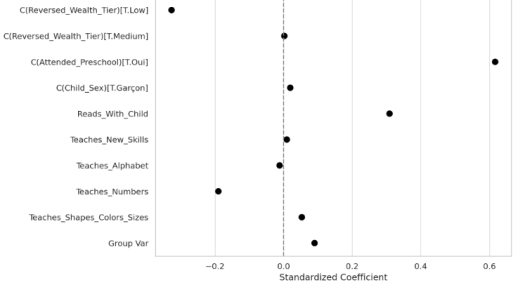
Children in the High Wealth Tier achieved significantly stronger scores on the IDELA Total Score than peers in the Medium and Low tiers. Average scores rose from 67.9 in the Low tier to 75.4 in Medium, and 84.2 in High. This progression aligns with international research that highlights early stimulation as vital to child development. A multilevel model that adjusted for preschool attendance, child sex, and geographic region confirmed that both Low and Medium tiers were associated with learning disadvantages compared to the High tier. Preschool attendance emerged as the most influential factor, while home instruction in letters and numbers had strong, positive effects. Other activities, such as reading or teaching shapes, had weaker or statistically insignificant impacts when included in the full model. These findings emphasize the need to promote foundational learning habits in under-resourced households. They reaffirm the importance of family engagement and ECE in closing developmental gaps.
Figure 3. IDELA Total Score By Region And Wealth Tier (Boxplot) - The authors.
These conclusions echo studies that underscore the predictive value of caregiver engagement. Dearden et al. used Millennium Cohort Study data to show that parental involvement in reading, storytelling, and teaching letters explained early learning outcomes. Sun et al. also found improved cognitive outcomes among low-income children in East Asia and the Pacific when parents applied structured learning at home. Rao et al. emphasized that what caregivers do—not what they possess—determines early childhood development. Research confirmed that behavioral indicators in the home predict school readiness more reliably than material wealth . These studies validate behaviorally defined wealth tiers as effective tools in identifying disparities in early development. Multilevel approaches, as demonstrated by Hindman et al. , support this logic by measuring the combined effects of home and classroom influences on literacy and numeracy.
Figure 4. Effects On IDELA total score (Forest plot) - The authors.
The multilevel mixed-effects model provides further insight into the relative contributions of individual, household, and regional factors to school readiness (Table 1). Separate models were estimated for each of the four IDELA domains: Language and Literacy, Emergent Numeracy, Socio-Emotional Learning, and Physical Development. Across all domains, preschool attendance and parental education emerge as significant fixed effects, while regional context and preschool infrastructure contribute to random effect variation.
Findings from the regression analysis confirm key assumptions of Ecological Systems Theory, Human Capital Theory, and the Cumulative Risk Model. Child development is shaped by layered environmental interactions, investment in early education produces measurable cognitive gains, and cumulative disadvantages compound learning deficits. The models highlight both the potential of ECE to mitigate disadvantage and the urgent need for targeted policy responses.
5. Discussion
This research examined school readiness among children in Djibouti by evaluating foundational learning across key developmental domains. The first research question assessed children’s preparedness for primary school through IDELA scores in literacy, numeracy, socio-emotional development, and physical growth. The results revealed notable disparities, especially in literacy and numeracy. Children who had attended preschool outperformed their peers by 10 points in literacy and 9 in numeracy, which illustrates the foundational importance of structured early education. These findings are consistent with global research showing that formal early learning environments support language acquisition and cognitive growth. In contrast, physical development scores remained relatively stable across groups. This suggests that motor development may depend more on age progression and informal home environments than on preschool exposure. These patterns validate the microsystem focus of Ecological Systems Theory, where child-caregiver and child-school interactions directly shape development. The results also reflect Human Capital Theory, which emphasizes the high returns of early educational investment .
The second research question investigated which factors—child characteristics, household conditions, or early learning environments—most influence readiness. Preschool attendance emerged as the most influential factor. Parental education also showed a strong association with IDELA performance. Children whose parents had completed secondary or higher education consistently attained higher scores across domains. Parental education functions both directly and indirectly, as it shapes the cognitive environment of the home and influences parental expectations. The behavioral wealth index, which captured the presence or absence of early learning activities, further clarified the impact of caregiver behavior. Children from homes where caregivers taught letters, numbers, and shapes and engaged in regular conversation demonstrated stronger outcomes, even when material resources were limited. This finding supports the Cumulative Risk Model, which posits that multiple disadvantages—including limited stimulation and low parental education—interact to constrain developmental progress .
Children without access to these forms of caregiver engagement showed lower school readiness, particularly in literacy and numeracy. These results align with global findings highlighting the importance of home-based stimulation in low-resource environments . The behavioral wealth index provided a context-sensitive measure of household risk, especially in settings where conventional asset-based indicators do not adequately capture educational disadvantage. While material assets may appear equal across households, variation in learning-related behaviors reveals important developmental disparities. This behavioral approach presents a compelling case for refining socioeconomic classification tools in ECE research.
The third research question examined how readiness outcomes vary across geographic and socioeconomic groups. The results revealed substantial regional inequalities. Children in Djibouti-Ville achieved the highest scores, while those in Dikhil and Tadjourah recorded the lowest. These gaps reflect variation in preschool coverage, household literacy levels, and subnational institutional capacity. Such patterns mirror those in other low- and middle-income countries, where urban centers benefit from resource concentration while rural areas often remain underserved . Socioeconomic disparities were also evident. Children in behaviorally enriched households consistently outperformed peers in less engaged settings. These findings confirm the significance of macrosystem-level conditions in shaping early learning outcomes, as proposed by Ecological Systems Theory. The results also reinforce the cumulative effects of disadvantage articulated in the Cumulative Risk Model.
The fourth research question considered policy implications for improving ECE and school readiness in Djibouti. The evidence underscores the urgency of expanding preschool services while enhancing their quality. Children in private preschools scored highest across all domains, which highlights a gap in instructional quality across public and community-based settings. Systemwide improvements must address disparities in teacher qualifications, instructional content, and learning materials. Household-level interventions that foster early literacy, numeracy, and caregiver engagement should complement institutional reforms. Geographic inequities call for tailored strategies such as rural preschool hubs, and support for nomadic communities. These policy responses resonate with all three theoretical frameworks and point to the need for coordinated action across household, community, and national systems.
The multilevel mixed-effects model provided robust estimates that accounted for the hierarchical nature of the data. Fixed effects confirmed the influence of preschool attendance and household-level learning behaviors, while random effects captured residual variation across regions. Approximately 30 percent of the variance in IDELA outcomes was attributable to household-level differences, which confirms the pivotal role of home environments. Nevertheless, limitations remain. The cross-sectional design does not allow for causal inference. Parental self-reporting may introduce bias, and although the behavioral wealth index demonstrated strong predictive value, its reliability should be assessed through longitudinal follow-up.
These findings are broadly consistent with international literature. Preschool attendance has proven effective in improving early learning outcomes in various low-income and middle-income settings, including Kenya, Peru, Bangladesh, and China . However, Djibouti’s experience presents several distinctive features. Gender differences in IDELA scores were negligible, and paternal involvement in early learning was relatively high. These outcomes may reflect Djibouti’s centralized education system, urban demographic concentration, and cultural emphasis on shared responsibility for caregiving. Such dynamics offer valuable lessons for policymakers in fragile and resource-constrained contexts. Djibouti illustrates how targeted investments, behavioral engagement, and service quality together can drive measurable improvements in school readiness.
In conclusion, this research provides a multidimensional analysis of school readiness in Djibouti. The findings highlight the interplay between access to preschool, household learning practices, and regional service disparities. Ecological Systems Theory , Human Capital Theory , and the Cumulative Risk Model each offer complementary perspectives on the observed patterns. Policymakers must adopt a comprehensive agenda that strengthens preschool quality, broadens geographic access, and equips caregivers with the knowledge and resources needed to support early learning at home. Policymakers must move beyond access metrics and consider the quality of instruction, the household environment, and broader systemic conditions that shape child development. Djibouti offers a model of practical, evidence-informed strategies that can inform early childhood development policy in comparable settings.
6. Conclusions
This research confirms that preschool access, socio-economic conditions, and parental engagement are the primary determinants of school readiness in Djibouti. The findings align with global literature on early learning inequalities and their long-term impact. Prior studies have shown that gaps in ECE limit academic achievement and socio-economic mobility . Children from disadvantaged households face compounding barriers to school readiness, which exacerbate long-term disparities in educational attainment . Structural inequities in preschool infrastructure remain especially pronounced in underserved regions such as Tadjourah . Expanding access to early learning opportunities will require targeted policy reforms and long-term financial commitments.
Preschool attendance exerts the strongest influence on school readiness. Children who attend preschool outperform their peers by 9.05 points on IDELA language and literacy assessments (p < 0.001). They also record higher scores across numeracy, socio-emotional development, and physical domains. These results support evidence that early education contributes to better school completion, labor productivity, and national economic performance . Investments in ECD deliver sustained cognitive and economic returns . Early education must be considered a public entitlement rather than a privilege limited to specific socio-economic groups .
Parental engagement emerges as a critical enabler of learning. Children whose fathers participate in home literacy activities score significantly higher in IDELA assessments (p = 0.015). This supports the view that households with limited literacy resources and weak learning environments hinder early cognitive development . National policies must equip parents—especially those in low-income communities—with tools to support home-based early learning . Strengthening family literacy and parenting education programs remains essential for improving learning outcomes across socio-economic groups .
Gender does not show a statistically significant effect on school readiness (p = 0.381). Boys and girls perform similarly when educational opportunities are equitable. However, future disparities may arise due to socialization, classroom dynamics, and institutional biases . Policymakers must ensure that future education reforms avoid reinforcing gender inequities and remain focused on universal access and quality improvement for all children.
Djibouti continues to face persistent implementation challenges in ECE. Although national education strategies identify ECE as a priority, gaps remain in teacher training, curriculum consistency, and financing . Weak governance structures constrain policy effectiveness and limit accountability. Strengthened coordination, long-term planning, and budgetary alignment are required to ensure that early learning systems deliver equitable outcomes .
The findings contribute to international research on ECD in low-resource contexts. Ecological Systems Theory explains the complex interaction of child, household, and institutional influences on learning . Human Capital Theory provides justification for early investment as a means to reduce inequality and foster inclusive development . Countries with flexible, community-based preschool models have achieved stronger school readiness outcomes . Djibouti can adapt similar approaches by aligning them with local needs, institutional capacity, and community dynamics .
Table 2. Predictors of school readiness: Multilevel mixed-effects model.

IDELA Domain

Variable

Coefficient

Std. Error

t-Statistic

P-Value

Language Literacy

Intercept

16.769

2.075

8.081

0.000

Language Literacy

Preschool Attendance[Yes]

9.047

1.022

8.853

0.000

Language Literacy

Home Literacy Access[M]

1.494

1.000

1.494

0.136

Language Literacy

Home Literacy Access[F]

2.642

1.088

2.429

0.015

Language Literacy

Num Children Preschool[Y]

3.921

1.652

2.373

0.018

Language Literacy

Child Gender[B]

-0.741

0.847

-0.876

0.381

Language Literacy

C(Region)[Arta]

-1.276

1.798

-0.710

0.478

Language Literacy

C(Region)[Dhikil]

-2.102

1.683

-1.249

0.212

Language Literacy

C(Region)[Djibouti]

3.653

1.323

2.760

0.006

Language Literacy

C(Region)[Tadjoura]

-3.247

1.452

-2.236

0.026

Language Literacy

Model Statistics

R²: 0.184

Adj R²: 0.174

F-stat: 19.21 (p=3.63e-29)

Durbin-Watson: 1.69

Emergent Numeracy

Intercept

24.239

1.371

17.679

0.000

Emergent Numeracy

Preschool Attendance[Y]

6.165

0.654

9.427

0.000

Emergent Numeracy

Primary School Type[Public]

-8.756

0.973

-8.998

0.000

Emergent Numeracy

C(Region)[Arta]

0.677

0.498

Emergent Numeracy

C(Region)[Dhikil]

-0.677

0.498

Emergent Numeracy

C(Region)[Djibouti]

0.677

0.498

Emergent Numeracy

C(Region)[Tadjoura]

-0.677

0.498

Emergent Numeracy

Model Statistics

R²: 0.272

Adj R²: 0.268

F-stat: 68.29 (p=2.68e-72)

Durbin-Watson: 1.68

Socio Emotional

Intercept

9.816

0.519

18.901

0.000

Socio Emotional

Preschool Attendance[Y]

1.841

0.325

5.662

0.000

Socio Emotional

Reading Activity[Y]

1.754

0.337

5.209

0.000

Socio Emotional

Child Gender[B]

0.098

0.286

0.344

0.731

Socio Emotional

C(Region)[Arta]

-0.951

0.568

-1.675

0.094

Socio Emotional

C(Region)[Dhikil]

-2.545

0.534

-4.769

0.000

Socio Emotional

C(Region)[Djibouti]

0.740

0.468

1.580

0.115

Socio Emotional

C(Region)[Tadjoura]

-2.139

0.495

-4.321

0.000

Socio Emotional

Model Statistics

R²: 0.166

Adj ²: 0.161

F-stat: 31.28 (p=1.09e-39)

Durbin-Watson: 1.78

Physical Development

Intercept

16.329

0.540

30.233

0.000

Physical Development

Num Children Preschool[Y]

0.319

0.500

0.639

0.523

Physical Development

New Skill Teaching[Y]

0.793

0.475

1.672

0.095

Physical Development

Preschool AttendanceY]

2.863

0.350

8.174

0.000

Physical Development

C(Region)[Arta]

0.757

0.613

1.236

0.217

Physical Development

C(Region)[Dhikil]

-2.323

0.577

-4.024

0.000

Physical Development

C(Region)[Djibouti]

1.270

0.507

2.503

0.012

Physical Development

C(Region)[Tadjoura]

-1.428

0.534

-2.677

0.008

Physical Development

Model Statistics

R²: 0.163

Adj R²: 0.158

F-stat: 30.53 (p=9.27e-39)

Durbin-Watson: 1.84

7. Policy Recommendations
The findings of this research point to three core, high-impact policy priorities: expanding equitable access to preschool, improving instructional quality, and strengthening caregiver engagement. These interventions directly address the most significant determinants of school readiness identified in this research—namely, preschool attendance, household socio-economic conditions, and parental involvement.
First, expanding preschool access in underserved areas must become a national priority. Regional disparities—especially in Tadjourah, and Dikhil—reflect deep inequities in service delivery . Reaching nomadic and rural populations requires flexible service models, such as community-based centers, and multilingual instructional approaches. Implementation should prioritize districts with the lowest IDELA performance and be guided by geospatial and demographic data. Cost implications are moderate relative to long-term returns, particularly when delivery leverages existing community infrastructure. Local partnerships with civil community-based organizations can reduce operating costs and enhance social acceptance.
Second, improving preschool quality is essential to ensure learning gains across all domains. Children in private preschools consistently outperform those in public or community-based programs, which points disparities in teaching methods, materials, and classroom support . MENFOP should finalize and operationalize a national ECE quality assurance framework that sets minimum standards for curriculum, teacher qualifications, pedagogy, and monitoring. Public investments must prioritize teacher training, certification, and classroom supervision. To attract and retain qualified educators in remote areas, national and regional authorities may need to offer financial incentives, housing allowances, or bonded service agreements. Decentralized teacher training hubs will reduce logistical barriers and expand opportunities for continuous professional development, particularly in underserved regions.
Third, reinforcing caregiver engagement must become a cornerstone of national ECE strategy. This research shows a strong association between paternal involvement in literacy activities and improved IDELA performance . National parenting education programs should equip caregivers—particularly in low-literacy households—with practical strategies to support early learning at home [85, 86]. Media campaigns, community workshops, and integration into maternal and child health services can expand outreach. These interventions are highly cost-effective, particularly when delivered through existing health and social protection platforms.
In summary, the path forward for Djibouti lies in prioritizing high-impact reforms that directly target the most influential drivers of school readiness. Strategic investment focused on equity, quality, and family engagement will produce measurable gains in learning, reinforce national development outcomes, and establish ECE as a cornerstone of long-term resilience.
Abbreviations

ECD

Early Childhood Development

ECE

Early Childhood Education

IDELA

International Development and Early Learning Assessment

MFF

Ministry for Women and the Family

MENA

Middle East and North Africa

MENFOP

Ministry of National Education and Vocational Training

Acknowledgments
We are grateful to MENFOP.
Author Contributions
Abdourahmane Ba: Conceptualization, Data curation, Formal Analysis, Investigation, Methodology, Validation, Visualization, Writing - original draft, Writing - review & editing
Mohamed Bille Barre: Conceptualization, Data curation, Formal Analysis, Investigation, Methodology, Project administration, Supervision, Validation, Visualization, Writing - review & editing
Data Availability Statement
The data is available from the authors upon reasonable request.
Conflicts of Interest
The authors declare no conflicts of interest.
References
[1] El-Kogali, S., & Krafft, C. (2015). Expanding opportunities for the next generation: Early childhood development in the Middle East and North Africa. World Bank Publications.
[2] Khattab, M. S. (1995). A comprehensive review of the status of early childhood development in the Middle East and North Africa. ERIC.
[3] Hlasny, V. (2017). Evolution of opportunities for early childhood development in Arab countries. International Journal of Human Rights in Healthcare, 10(4), 256-276.
[4] Seife, T. K. (2020). Educational system obstruction consequence in the political volatility: Comparative assessments Somalia and Djibouti. In Educational system obstruction consequence in the political volatility comparative assessments Somalia and Djibouti (pp. 2-25). Springer Nature.
[5] Carr-Hill, R. A., Eshete, A., Sedel, C., & de Souza, A. (2005). The education of nomadic peoples in East Africa: Djibouti, Eritrea, Ethiopia, Kenya, Tanzania and Uganda (Synthesis Report No. 799). African Development Bank.
[6] Djibouti Ministry of National Education and Vocational Training. (2023). Annuaire statistique de l’éducation 2022-2023. MENFOP.
[7] World Bank. (2024). Country climate and development report: Republic of Djibouti. World Bank Publications.
[8] Carr-Hill, R. (2006). Educational services and nomadic groups in Djibouti, Eritrea, Ethiopia, Kenya, Tanzania and Uganda. In The education of nomadic peoples: Current issues, future prospects (pp. 35-52). Berghahn Books.
[9] D’Addio, A. (2024). Regulation and governance of non-state early childhood care and education in African countries. UNESCO.
[10] Yoshikawa, H., & Kabay, S. (2015). The evidence base on early childhood care and education in global contexts. Background paper for the UNESCO 2015 Education for All Global Monitoring Report.
[11] Barnett, W. S., & Lamy, C. E. (2013). Achievement gaps start early: Preschool can help. In P. L. Carter & K. G. Welner (Eds.), Closing the opportunity gap: What America must do to give every child an even chance (pp. 98-110). Oxford University Press.
[12] Heckman, J. J. (2006). Skill formation and the economics of investing in disadvantaged children. Science, 312(5782), 1900-1902.
[13] Duncan, G. J., & Magnuson, K. (2013). Investing in preschool programs. Journal of Economic Perspectives, 27(2), 109-132.
[14] Engle, P. L., Fernald, L. C. H., Alderman, H., Behrman, J. R., O'Gara, C., Yousafzai, A.,... & Iltus, S. (2011). Strategies for reducing inequalities and improving developmental outcomes for young children in low-income and middle-income countries. The Lancet, 378(9799), 1339-1353.
[15] UNICEF. (2019). A world ready to learn: Prioritizing quality early childhood education. United Nations Children’s Fund.
[16] Yoshikawa, H., Weiland, C., Brooks-Gunn, J., Burchinal, M. R., Espinosa, L. M., Gormley, W. T.,... & Zaslow, M. J. (2013). Investing in our future: The evidence base on preschool education. Society for Research in Child Development.
[17] Mullis, I., Martin, M., Foy, P., & Drucker, K. (2012). PIRLS 2011 international results in reading. TIMSS & PIRLS International Study Center, Boston College.
[18] Berlinski, S., & Schady, N. (2015). The early years: Child well-being and the role of public policy. Springer Nature.
[19] Shonkoff, J. P., & Phillips, D. A. (2000). From neurons to neighborhoods: The science of early childhood development. National Academies Press.
[20] Pisani, L., Borisova, I., & Dowd, A. J. (2018). Developing and validating the International Development and Early Learning Assessment (IDELA). International Journal of Educational Research, 91, 1-15.
[21] Heckman, J. J., & Masterov, D. V. (2007). The productivity argument for investing in young children. Early Childhood Research Collaborative Discussion Paper.
[22] Farah, A. I. (2024). Rapid learning for lasting change: Accelerated basic education in post-conflict, Somalia. International Journal of Education, 9(4), 188-202.
[23] Dudzik, D. L. (2008). English policies, curricular reforms, and teacher development in multilingual, postcolonial Djibouti (Doctoral dissertation). University of Minnesota.
[24] UNICEF. (2019). Djibouti country programme document 2018-2022. United Nations Children’s Fund.
[25] Idereh, A. M. (2018). Collaborative community and social development: A study of selected neighborhoods in Djibouti (Doctoral dissertation). Kampala International University, College of Economics and Management.
[26] Shehadeh, H. M. (2008). Approaching the problem of equity, quality and access of early childhood care and education: A descriptive analysis of growth and development in the Arab States (Doctoral dissertation). Seton Hall University.
[27] Ayan, M. I. (2018). Collaborative community and social development: A study of selected neighborhoods in Djibouti (Doctoral dissertation). Kampala International University, College of Economics.
[28] Barnes, V. (2018). Child-centred social work: Theory and practice. Bloomsbury Publishing.
[29] Mollborn, S. (2016). Young children’s developmental ecologies and kindergarten readiness. Demography, 53(6), 1853-1882.
[30] Schoon, I., & Heckhausen, J. (2019). Conceptualizing individual agency in the transition from school to work: A social-ecological developmental perspective. Adolescent Research Review, 4, 135-148.
[31] Currie, J., & Almond, D. (2011). Human capital development before age five. In D. Card & O. Ashenfelter (Eds.), Handbook of labor economics (Vol. 4, pp. 1315-1486). Elsevier.
[32] Johnson, R. C., & Schoeni, R. F. (2011). The influence of early-life events on human capital, health status, and labor market outcomes over the life course. The BE Journal of Economic Analysis & Policy, 11(3).
[33] Kamuli, K. E. (2019). An exploration of drop-in among students who are at risk of dropping out of lower secondary school in Eritrea (Doctoral dissertation). University College London.
[34] Mistry, R. S., Benner, A. D., Biesanz, J. C., Clark, S. L., & Howes, C. (2010). Family and social risk, and parental investments during the early childhood years as predictors of low-income children's school readiness outcomes. Early Childhood Research Quarterly, 25(4), 432-449.
[35] Rodriguez-Escobar, O. L. (2009). Application of the cumulative risk model in predicting school readiness in Head Start children (Doctoral dissertation).
[36] Britto, P. R., Yoshikawa, H., & Boller, K. (2011). Quality of early childhood development programs in global contexts: Rationale for investment, conceptual framework and implications for equity. Social Policy Report, 25(2), 1-31.
[37] Crouch, L., & Merseth, K. A. (2017). The preschool entitlement: A locally adaptable policy instrument to expand and improve preschool education (RTI Press Publication No. OP-0053-1705). RTI International.
[38] McCoy, D. C., Salhi, C., Yoshikawa, H., Black, M. M., Britto, P. R., & Fink, G. (2018). Home- and center-based learning opportunities for preschoolers in low- and middle-income countries. Children and Youth Services Review, 88, 44-56.
[39] Krafft, C. (2015). Increasing educational attainment in Egypt: The impact of early childhood care and education. Economics of Education Review, 46, 127-143.
[40] Winter, S. M., & Kelley, M. F. (2008). Forty years of school readiness research: What have we learned? Childhood Education, 84(5), 260-266.
[41] Duncan, G. J., Dowsett, C. J., Claessens, A., Magnuson, K., Huston, A. C., Klebanov, P., Pagani, L. S., Feinstein, L., Engel, M., Brooks-Gunn, J., Sexton, H., Duckworth, K., & Japel, C. (2007). School readiness and later achievement. Developmental Psychology, 43(6), 1428-1446.
[42] Black, M. M., Walker, S. P., Fernald, L. C. H., Andersen, C. T., DiGirolamo, A. M., Lu, C., & Grantham-McGregor, S. (2017). Early childhood development coming of age: Science through the life course. The Lancet, 389(10064), 77-90.
[43] Rose, P., & Greeley, M. (2006). Education in fragile states: Capturing lessons and identifying good practice. DAC Fragile States Group.
[44] Browne, D. T., Wade, M., Prime, H., & Jenkins, J. M. (2018). School readiness amongst urban Canadian families: Risk profiles and family mediation. Journal of Educational Psychology, 110(1), 133-146.
[45] Meisels, S. J., & Shonkoff, J. P. (2000). Early childhood intervention: A continuing evolution. In J. P. Shonkoff & S. J. Meisels (Eds.), Handbook of early childhood intervention (2nd ed., pp. 3-31). Cambridge University Press.
[46] Ou, S.-R. (2005). Pathways of long-term effects of an early intervention program on educational attainment: Findings from the Chicago longitudinal study. Journal of Applied Developmental Psychology, 26(5), 578-611.
[47] Glewwe, P. W., Hanushek, E. A., Humpage, S. D., & Ravina, R. (2011). School resources and educational outcomes in developing countries: A review of the literature from 1990 to 2010 (Working Paper No. 17554). National Bureau of Economic Research.
[48] Youssouf, Y. B. (2023). The future of physical education and sports in light of the crisis of playgrounds in schools in the Republic of Djibouti. Journal of Advances in Sports and Physical Education, 6(6), 96-101.
[49] Gorard, S., See, B. H., Siddiqui, N., El Soufi, N., Hitt, L., & Lu, B. (2023). Improving attendance and enrolment at school for children living in poverty. Nordic Journal of Systematic Reviews in Education, 1(1), 1-29.
[50] Kingston, S., Huang, K. Y., Calzada, E., Dawson‐McClure, S., & Brotman, L. (2013). Parent involvement in education as a moderator of family and neighborhood socioeconomic context on school readiness among young children. Journal of Community Psychology, 41(3), 265-276.
[51] Sheridan, S. M., Knoche, L. L., Edwards, C. P., Bovaird, J. A., & Kupzyk, K. A. (2010). Parent engagement and school readiness: Effects of the Getting Ready intervention on preschool children's social-emotional competencies. Early Education and Development, 21(1), 125-156.
[52] Lee, Y., Kim, K., & Yudron, M. (2024). School readiness of immigrant-origin children and enriching experiences. Early Education and Development, 35(6), 1127-1140.
[53] Hibel, J. R. (2009). Divergent academic pathways: Racial/ethnic, national origin, and generational status variation in school readiness, kindergarten through eighth grade academic ability growth, and adolescent academic self-concept (Doctoral dissertation). Pennsylvania State University.
[54] Panlilio, C. C., Harden, B. J., & Harring, J. (2018). School readiness of maltreated preschoolers and later school achievement: The role of emotion regulation, language, and context. Child Abuse & Neglect, 75, 82-91.
[55] Lapointe, V. R., Ford, L., & Zumbo, B. D. (2007). Examining the relationship between neighborhood environment and school readiness for kindergarten children. Early Education and Development, 18(3), 473-495.
[56] Hong, Y., & Zeng, D. (2023). Early and continuing grandparental care and middle school students’ educational and mental health outcomes in China. Journal of Community Psychology, 51(2), 676-694.
[57] McClelland, M. M., Tominey, S. L., Schmitt, S. A., Hatfield, B. E., Purpura, D. J., Gonzales, C. R., & Tracy, A. N. (2019). Red light, purple light! Results of an intervention to promote school readiness for children from low-income backgrounds. Frontiers in Psychology, 10, 2365.
[58] Vijayalakshmi, A., & Jayasudha, M. (2024). Artificial intelligence and data analytics. Academic Guru Publishing House.
[59] Raudenbush, S. W. (1993). A crossed random effects model for unbalanced data with applications in cross-sectional and longitudinal research. Journal of Educational Statistics, 18(4), 321-349.
[60] Cunnings, I., Finlayson, I., & Plonsky, L. (2015). Mixed effects modeling and longitudinal data analysis. In L. Plonsky (Ed.), Advancing quantitative methods in second language research (pp. 159-181). Routledge.
[61] Teshale, A. B., Tesema, G. A., Worku, M. G., Yeshaw, Y., & Tessema, Z. T. (2020). Anemia and its associated factors among women of reproductive age in eastern Africa: A multilevel mixed-effects generalized linear model. PLoS One, 15(9), e0238957.
[62] Grant, E. M., Young, D. R., & Wu, T. T. (2015). Predictors for physical activity in adolescent girls using statistical shrinkage techniques for hierarchical longitudinal mixed effects models. PLoS One, 10(4), e0125431.
[63] Forns, J., Dadvand, P., Foraster, M., Alvarez-Pedrerol, M., Rivas, I., López-Vicente, M.,... & Sunyer, J. (2016). Traffic-related air pollution, noise at school, and behavioral problems in Barcelona schoolchildren: A cross-sectional study. Environmental Health Perspectives, 124(4), 529-535.
[64] Dearden, L., Sibieta, L., & Sylva, K. (2011). The socio-economic gradient in early child outcomes: Evidence from the Millennium Cohort Study. IZA Discussion Paper Series. Retrieved from
[65] Sun, J., Lau, C., Sincovich, A., & Rao, N. (2018). Socioeconomic status and early child development in East Asia and the Pacific: The protective role of parental engagement in learning activities. Children and Youth Services Review, 93, 321-330.
[66] Rao, N., Cohrssen, C., Sun, J., Su, Y., & Perlman, M. (2021). Early child development in low-and middle-income countries: Is it what mothers have or what they do that makes a difference to child outcomes? Advances in Child Development and Behavior, 60, 1-44.
[67] Soto-Ramírez, P., Jiang, H., & Strasser, K. (2022). Early home learning environment profiles and their contribution to child development in Chile. Children and Youth Services Review, 137, 106488.
[68] McGinnity, F., McMullin, P., & Murray, A. (2017). Social inequality in cognitive outcomes in Ireland: What is the role of the home learning environment and childcare? In M. M. Connolly & T. Williams (Eds.), Cherishing all the children equally? Children's economic and social rights (pp. 199-218). Edward Elgar Publishing.
[69] Hindman, A. H., Skibbe, L. E., & Miller, A. (2010). Ecological contexts and early learning: Contributions of child, family, and classroom factors during Head Start to literacy and mathematics growth through first grade. Early Childhood Research Quarterly, 25(2), 235-250.
[70] Rimm-Kaufman, S. E., & Pianta, R. C. (2000). An ecological perspective on the transition to kindergarten: A theoretical framework to guide empirical research. Journal of Applied Developmental Psychology, 21(5), 491-511.
[71] Currie, J., & Almond, D. (2011). Human capital development before age five. In D. Card & O. Ashenfelter (Eds.), Handbook of labor economics (Vol. 4, pp. 1315-1486). Elsevier.
[72] Mistry, R. S., Benner, A. D., Biesanz, J. C., Clark, S. L., & Howes, C. (2010). Family and social risk, and parental investments during the early childhood years as predictors of low-income children's school readiness outcomes. Early Childhood Research Quarterly, 25(4), 432-449.
[73] Heckman, J. J. (2011). The economics of inequality: The value of early childhood education. American Educator, 35(1), 31.
[74] Mollborn, S. (2016). Young children’s developmental ecologies and kindergarten readiness. Demography, 53(6), 1853-1882.
[75] Evans, G. W., Li, D., & Whipple, S. S. (2013). Cumulative risk and child development. Psychological Bulletin, 139(6), 1342-1396.
[76] Pratt, M. E., McClelland, M. M., Swanson, J., & Lipscomb, S. T. (2016). Family risk profiles and school readiness: A person-centered approach. Early Childhood Research Quarterly, 36, 462-474.
[77] Downer, J. T., & Myers, S. S. (2010). Application of a developmental/ecological model to family-school partnerships. In S. L. Christenson & A. L. Reschly (Eds.), Handbook of school-family partnerships (pp. 3-29). Routledge.
[78] Grabowski, L. J., Schabo, K. T., & Mortimer, J. T. (2001). Global and economic self-efficacy in the educational attainment process. Social Psychology Quarterly, 64(2), 164-179.
[79] World Bank. (2018). World development report 2018: Learning to realize education’s promise. Washington, DC: World Bank.
[80] Mwaura, P. A., Sylva, K., & Malmberg, L. E. (2008). Evaluating the Madrasa preschool programme in East Africa: A quasi‐experimental study. International Journal of Early Years Education, 16(3), 237-255.
[81] Garcia, M. H., Pence, A., & Evans, J. (Eds.). (2008). Africa’s future, Africa’s challenge: Early childhood care and development in Sub-Saharan Africa. Washington, DC: World Bank Publications.
[82] Su, Y., Lau, C., & Rao, N. (2020). Early education policy in China: Reducing regional and socioeconomic disparities in preschool attendance. Early Childhood Research Quarterly, 53, 11-22.
[83] Grace, R., Bowes, J., & Elcombe, E. (2014). Child participation and family engagement with early childhood education and care services in disadvantaged Australian communities. International Journal of Early Childhood, 46(3), 271-298.
[84] Markowitz, A. J., Bassok, D., & Grissom, J. A. (2020). Teacher-child racial/ethnic match and parental engagement with Head Start. American Educational Research Journal, 57(5), 2132-2174.
[85] Barnett, M. A., Paschall, K. W., Mastergeorge, A. M., Cutshaw, C. A., & Warren, S. M. (2020). Influences of parent engagement in early childhood education centers and the home on kindergarten school readiness. Early Childhood Research Quarterly, 53, 260-273.
[86] Pilarz, A. R., Lin, Y. C., & Premo, E. M. (2024). Family engagement practices and children’s attendance and early learning skills in a public pre-kindergarten program. Children and Youth Services Review, 163, 107794.
Cite This Article
  • APA Style

    Ba, A., Barre, M. B. (2025). Determinants of Children's Preparedness for Primary Education in Djibouti: An Empirical Analysis Using IDELA Assessment. International Journal of Elementary Education, 14(2), 20-38. https://doi.org/10.11648/j.ijeedu.20251402.11

    Copy | Download

    ACS Style

    Ba, A.; Barre, M. B. Determinants of Children's Preparedness for Primary Education in Djibouti: An Empirical Analysis Using IDELA Assessment. Int. J. Elem. Educ. 2025, 14(2), 20-38. doi: 10.11648/j.ijeedu.20251402.11

    Copy | Download

    AMA Style

    Ba A, Barre MB. Determinants of Children's Preparedness for Primary Education in Djibouti: An Empirical Analysis Using IDELA Assessment. Int J Elem Educ. 2025;14(2):20-38. doi: 10.11648/j.ijeedu.20251402.11

    Copy | Download

  • @article{10.11648/j.ijeedu.20251402.11,
      author = {Abdourahmane Ba and Mohamed Bille Barre},
      title = {Determinants of Children's Preparedness for Primary Education in Djibouti: An Empirical Analysis Using IDELA Assessment
    },
      journal = {International Journal of Elementary Education},
      volume = {14},
      number = {2},
      pages = {20-38},
      doi = {10.11648/j.ijeedu.20251402.11},
      url = {https://doi.org/10.11648/j.ijeedu.20251402.11},
      eprint = {https://article.sciencepublishinggroup.com/pdf/10.11648.j.ijeedu.20251402.11},
      abstract = {School readiness is a foundational predictor of long-term academic success and socio-economic mobility. In Djibouti, disparities in early learning outcomes reflect unequal preschool access, household-level differences, and regional disparities in service provision. This research addresses three questions: (1) What are the levels of school readiness across key developmental domains? (2) Which child-, household-, and region-level factors influence school readiness outcomes? (3) How do these outcomes vary across socio-economic and geographic groups? Drawing on data from 1,155 children aged 5-6 assessed through the International Development and Early Learning Assessment (IDELA), this research employs a multilevel mixed-effects model to estimate the effects of preschool attendance, caregiver engagement, and institutional context across four domains: literacy, numeracy, socio-emotional development, and physical development. The conceptual framework integrates Ecological Systems Theory, Human Capital Theory, and the Cumulative Risk Model to examine the interplay between home, school, and structural environments. Preschool attendance is the strongest predictor of literacy outcomes, associated with a 9.05-point gain (p < 0.001). Father’s participation in home literacy adds 2.64 points (p = 0.015), while the presence of a preschool-enrolled sibling contributes 3.92 points (p = 0.018). No statistically significant gender-based differences were found (p = 0.381). Parental education and behavioral engagement show strong positive associations with literacy and numeracy performance. Public school students score lower in numeracy than peers in private institutions (p < 0.05). Regional disparities are substantial. Preschool attendees in Djibouti-Ville score an average of 99.7, compared to 72.9 in Dikhil and 75.6 in Obock. Children in Tadjourah score 6.90 points lower than those in Ali-Sabieh (p = 0.026). Findings highlight the need for integrated policy reforms that expand equitable access, improve instructional quality, and strengthen parental engagement. Data-driven, multisectoral strategies will enhance school readiness and support Djibouti’s broader development goals.
    },
     year = {2025}
    }
    

    Copy | Download

  • TY  - JOUR
    T1  - Determinants of Children's Preparedness for Primary Education in Djibouti: An Empirical Analysis Using IDELA Assessment
    
    AU  - Abdourahmane Ba
    AU  - Mohamed Bille Barre
    Y1  - 2025/05/09
    PY  - 2025
    N1  - https://doi.org/10.11648/j.ijeedu.20251402.11
    DO  - 10.11648/j.ijeedu.20251402.11
    T2  - International Journal of Elementary Education
    JF  - International Journal of Elementary Education
    JO  - International Journal of Elementary Education
    SP  - 20
    EP  - 38
    PB  - Science Publishing Group
    SN  - 2328-7640
    UR  - https://doi.org/10.11648/j.ijeedu.20251402.11
    AB  - School readiness is a foundational predictor of long-term academic success and socio-economic mobility. In Djibouti, disparities in early learning outcomes reflect unequal preschool access, household-level differences, and regional disparities in service provision. This research addresses three questions: (1) What are the levels of school readiness across key developmental domains? (2) Which child-, household-, and region-level factors influence school readiness outcomes? (3) How do these outcomes vary across socio-economic and geographic groups? Drawing on data from 1,155 children aged 5-6 assessed through the International Development and Early Learning Assessment (IDELA), this research employs a multilevel mixed-effects model to estimate the effects of preschool attendance, caregiver engagement, and institutional context across four domains: literacy, numeracy, socio-emotional development, and physical development. The conceptual framework integrates Ecological Systems Theory, Human Capital Theory, and the Cumulative Risk Model to examine the interplay between home, school, and structural environments. Preschool attendance is the strongest predictor of literacy outcomes, associated with a 9.05-point gain (p < 0.001). Father’s participation in home literacy adds 2.64 points (p = 0.015), while the presence of a preschool-enrolled sibling contributes 3.92 points (p = 0.018). No statistically significant gender-based differences were found (p = 0.381). Parental education and behavioral engagement show strong positive associations with literacy and numeracy performance. Public school students score lower in numeracy than peers in private institutions (p < 0.05). Regional disparities are substantial. Preschool attendees in Djibouti-Ville score an average of 99.7, compared to 72.9 in Dikhil and 75.6 in Obock. Children in Tadjourah score 6.90 points lower than those in Ali-Sabieh (p = 0.026). Findings highlight the need for integrated policy reforms that expand equitable access, improve instructional quality, and strengthen parental engagement. Data-driven, multisectoral strategies will enhance school readiness and support Djibouti’s broader development goals.
    
    VL  - 14
    IS  - 2
    ER  - 

    Copy | Download

Author Information
  • Geneve 3, Business Science Institute/IAE Lyon, Dakar, Senegal

    Biography: Abdourahmane Ba, a Statistician Engineer (ESEA-Dakar) and Doctor of Business Administration (BSI), specialises in public policy, evaluations, MEL systems, and development programme management. With over 20 years of experience, he has led major development programs and international studies in Africa. His work integrates strong analytical methods to support multi-sectorial policy decisions, and economic development. Villa 789, Grand Mbao, Dakar, Senegal. https://www.linkedin.com/in/dr-abdourahmane-b-83275715a/.

    Research Fields: Abdourahmane Ba: Monitoring and evaluation system, development program evaluation, public policy evaluation, economic growth, education

  • National Education and Vocational Training, Djibouti Ville, Djibouti

    Biography: Mohamed Bille Barre is the Director of Evaluation at the Djiboutian Ministry of National Education and Vocational Training (MENFOP), specializing in educational assessments and policy development. A doctoral researcher at the University of Geneva, he has extensive experi-ence in implementing national and international evaluations (PASEC, EGRA, IDELA), data analysis, and capacity building. He has also held leadership roles in Djibouti’s education sector, including as a lycée principal. Djibouti-ville, Djibouti.

    Research Fields: Mohamed Bille Barre: Monitoring and evaluation system, development program evaluation, public policy evaluation, economic growth, education